
Tuesday 02 June 2026
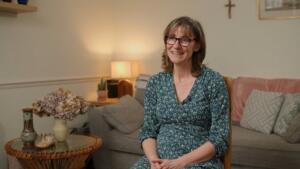
After selling her business Sara was at a crossroads in her life and decided to do the one thing she always wanted to do but never could, become a Foster Carer. In this interview, Sara talks about her fostering journey and how it led to her new career as a counsellor. She also talks about her neurodivergence diagnosis and how her relationships with her Social Workers have helped her feel supported.
It was 2013 when I first got in touch with Five Rivers. I was living in Cornwall at the time, and I had sold my business. I was going through a natural pause in life, and I thought about all the things I wanted to do and hadn’t done. Fostering was something I always wanted to do from a very young age, so I stopped thinking about it and did something about it. So, I got in touch with Five Rivers Child Care and went through the process in 2014.
I also started training to become a counsellor and Five Rivers supported me throughout; it took me 5 years to train and in those 5 years I continued to foster different children.
I became a Foster Carer because I love Family, and I wanted to provide an opportunity for children to experience the richness of family life, to learn the importance of it and how that doesn’t have to be restricted to conventional ideals.
When I was in Cornwall, Five Rivers was the only agency that offered substantial training, and they were the only agency I found that was also a Social Enterprise, which really appealed to me.
My first Social Worker would come round every week, and we really got to know each other well. I think as a single person fostering, they have to get to know you well because you are on your own and you have to be able to handle it by yourself; so, they have to make sure you are capable of being a good caregiver.
One thing that we did, was the Readiness to Foster weekend with other people going through the fostering process. It was great, people would bring their families, and we would do different exercises which I still use now. It gave you so much insight into what to expect and what your foster child may be dealing with in terms of how neglect can present. It was such a great experience.
I am not someone who panics. My Social Worker at Five Rivers knows that I am neurodivergent, and they know the kind of support that I need. If I call my Social Worker, they always call me back because they know when I call, I need support and if they are unavailable, they transfer me to a duty Social Worker; so, I always have someone there for me. It is important for me to have that because as someone with neurodivergence I need that support and have someone there on call to help.
Initially when I first started fostering, I was undiagnosed and struggled with emotional regulation and criticism and judgment really stung, it felt like a physical blow.
So, I found it exceedingly difficult because children tend to push you away and that hurts; I honestly was not sure if I could keep going. At the time I had a Social Worker who would help talk me down and externally process my feelings.
Having someone to listen to me really helped me. It made me a more reflective carer because I had to learn to reflect and look outside of myself in those moments. I also have time blindness; I would often forget that I had to be somewhere or do something, so over the years my Social Worker would send me reminders to remind me about things I needed to do. Which is why I have stayed with Five Rivers for so long because I have that support.
He was lovely, he stayed with me for 6 weeks, it was a two-week respite stay for Christmas, but his carer got ill while on holiday, so he stayed with me for 6 weeks. He was 8, and so lovely. I was living in Truro at the time, and they had the light festival. I took him to see Santa and I also took him back to the fishing village where he lived so that he could do some of the things he would usually do over the holidays. I made him photo book with pictures of all the things we had done together and gave it to him as a gift.
My first longer-term placement was an undiagnosed autistic girl who was 14 and had additional needs. She had previous trauma and looking back, nobody knew what we now know about neurodivergence, but now we have all this wonderful research and understanding.
She was with me for a couple of years and in that time, she became more trusting of me and the people around us, she also became more resilient in going out. I learned to create a fostering bubble around us. I wouldn’t let anything outside of that bubble affect us and I didn’t let myself become self-conscious, I just focussed on her and what she needed in that moment.
There’s always a reason for a child’s behaviour and if a child has no way of expressing themselves verbally, they will express themselves in other ways.
Oh gosh, that’s so difficult because there have been so many rewarding moments as a Foster Carer. I think quite possibly, the lad I am looking after now. Seeing the progress he has made since living with me is amazing. He is constantly surprising me and he is doing incredibly well; we are getting him ready for university. I think he will be my last foster child, so I feel like I’m ending on a high note.
The training from when I first became a Foster Carer because I wasn’t aware of anything. I honestly thought all I needed to do was love the child, but you need more than that, the knowledge I learned turned out to be essential. I was actually one of the first people trained in Playfulness, Acceptance, Curiosity, and Empathy (PACE) and that was really enlightening. It took me a while to get my head around it but now, I actually use PACE with everyone. It really is a way of life. The training I received from Five Rivers was honestly the launchpad that led me into my career as a Counsellor, and my foster children led me to my specialism.
I think embracing it as a way of life. And if you are a family, everybody has to be onboard and want to embrace it as a way of life because your life will change. You must be open to change because if you aren’t, you will only ever see the behaviour and not the child underneath. And lastly, accept that not everyone will understand your choice to foster, and that’s okay. What matters is that you are following what feels right to you.
Discover Sara’s journey and how it shaped where she is now.
If you’re inspired by Sara’s story, contact our friendly Carer Enquiries team today for an informal chat about becoming a Foster Carer.
Get in touch