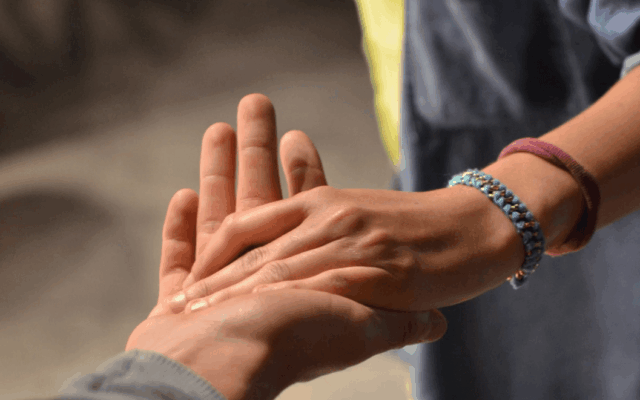

Behind every reassuring conversation, a successful school run and perfectly flipped pancake is a dedicated residential worker helping children and young people feel safe, supported and valued.
Working in a residential home is so much more than just a job. It’s about building trust, creating stability, and being there to help them through the everyday moments and challenges they may face as they grow and prepare for life beyond care.
In this piece, our team at The Orchard shares what life is really like as a Residential Child Care Worker in a children’s home. The team talks about the many ways they support children and young people in their care. From morning routines, emotional support, teaching life skills that encourage independence and how they encourage each other as a team.
Residential Child Care Workers play a vital role in the lives of children and young people in our care. It’s their care and support that truly turns a house into a home.
A typical day at The Orchard is structured, nurturing, and responsive to the individual needs of the children.
No two days are ever the same.
We are up and ready for the day at 7:00 a.m. We ensure the house is clean and tidy. We check calendars for the day, ensuring that any planned activities, appointments, and meetings are organised between adults. We support our children with their waking routine, encouraging them to get up and ready for the day. We also make ourselves available to help them with getting to school, family time, or other planned activities for the day.
We will provide emotional support and encouragement throughout the day. This will be different every day and might include helping children with their emotions, supporting education, taking them to school, extra-curricular activities, attending meetings, and working closely with other professionals.
A big part of our role is building trusting relationships with our children. We provide both practical and emotional care, acting as positive role models, and helping them develop confidence, routine, and life skills.
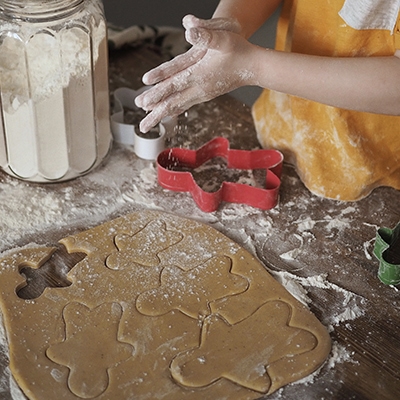
It varies, on weekends at The Orchard our children enjoy a special breakfast, we love pancakes here! They love getting involved in making these and preparing lots of different toppings for everyone to enjoy.
Their care is tailored to their individual needs. We have a young person who has lived here for over a year and she is very settled. We support her with positive conversations, activities she loves, and lots of love throughout the day.
One of our children has been struggling with their mental health and can find it hard to get out of bed during the day to engage with anyone. We have been giving them emotional support when needed and if they are unable to manage this independently, we offer them an low-level activity, like listening to music to try and encourage them to get up for the day. We encourage our children and young people to get involved in cooking meals together, baking and doing things that will help them developmentally in the long run in building their life skills.
All of our care is about meeting our children where they are, not applying pressure on them to do things they can’t manage right now. We like to focus on what they can do to grow their confidence in their abilities rather than what they aren’t comfortable with doing.
We have a weekly menu planner to help with predictability and planning. Our young people each get to choose their own food that they’d like to eat for the week. We also encourage them to help prepare and cook dinner to build their independent living skills and to get everyone contributing.
We eat dinner together as a family as this offers a chance to check in with the children about their day, encourage social skills, and create a sense of belonging.
In the evenings we are focused on winding down, spending quality time together, and maintaining a homely atmosphere. We’ll make sure the blinds are pulled down, and lights are dimmed to relax. Due to our children being teenagers, they spend a lot of time chilling out in their bedrooms. We do have movie nights, play board games, or simply sit and chat as much as teenagers will allow.
We actively encourage a wide range of activities for all of our children. These are planned around their individual interests and what we know they enjoy, while also introducing new hobbies and skills to broaden their experiences.
For example, recently we have introduced our young people to activities such as pickleball and carnival-themed events. We have also been making good use of local swimming pools, and during the recent heatwave, we purchased a 14ft pool for the garden. This has provided opportunities for everyone to spend time together, playing, listening to music, and enjoying shared experiences such as barbecues.
Residential Child Care Workers play a vital role in the lives of children and young people in our care. It’s their care and support that truly turns a house into a home.
Our Clinical Practitioner makes time for the children every week and is readily available should they need her support. We work really well together because we have regular team meetings and check in with each other. If there is an issue, our team feels comfortable enough to bring it up right away so we can work it out together; we really are like a family.
We are a trauma-informed team, committed to caring for children and young people whose needs are not being met at home. When there are concerns about their safety or wellbeing, we provide a safe, nurturing home where they can feel secure. Once they come to us, we care for them as our own, and this becomes their home.
We like to make The Orchard feel at home, so whenever we have new children and young people come to live with us, we ask them what their favourite colour is, favourite foods and how they would like to decorate their room. We want them to feel as welcome as possible; we want them to make The Orchard their home.
The children are at the centre of everything we do, their ideas, their opinions are really important to us; we recently redecorated the whole home based on the children’s ideas; they told us what they wanted the home to look and feel like.
Our clinical space with our dedicated Clinician is the heartbeat of how we become the best therapeutic carers for our children. It provides us with the tools and understanding needed to accept children as they are, while also recognising that not all behaviours are acceptable.
This support allows us to respond with empathy and consistency, rather than reaction. I truly believe I wouldn’t be the Residential Care Worker I am today without our Clinician equipping me with the knowledge, confidence, and practical tools I need to support our children effectively.
As therapeutic carers; we can work through things with them. It’s just about supporting them and being there for them. We’re currently preparing some of them for independent living. We have been helping them build the skills they’ll need to live independently, such as cooking, cleaning, and understanding their finances.
We also support their educational needs; both of the children living at The Orchard have home tutors who work with them in our brilliant education pods. We also help them with college applications and CV writing.
Each home at Five Rivers has an assigned Clinician, ours comes in once a week to provide 1;1 therapy with the children in our art therapy pod. We also have a team meeting with a Clinical Practitioner biweekly so we can therapeutically care for our children and young people.
You need to build a relationship with them, lead with empathy, so that they know that they’re understood and heard and that we care about their opinion. So, if they want to talk to you about anything, you are there to listen to them.
As Residential Care Workers, we understand the importance of working closely with families, Social Workers, and other professionals to ensure the best outcomes for the child. We maintain open and honest communication with everyone involved, providing regular updates on the child’s progress, wellbeing, and any concerns.
We support and encourage positive relationships between the child and their family where appropriate, facilitating contact visits and helping the child prepare emotionally before and after these interactions and remain respectful and non-judgmental, recognising that families play a key role in the child’s life.
We also attend and contribute to meetings such as reviews, care planning meetings, and professionals’ meetings, where we share observations, reports, and relevant information; ensuring that our input reflects the child’s voice, wishes, and feelings.
Working collaboratively with other professionals such as teachers, therapists, and health workers to provide consistent support is very important, and we do this by sharing information and following agreed care plans. We create a joined-up approach that promotes stability, development, and positive outcomes for the child.
Throughout this, we always maintain professionalism, confidentiality, and a child-centred approach.
Consistency is everything. It’s about showing up and listening to them no matter what, even if they say the worst things to you.
At the end of the day, we have a catch-up to speak about how we may be feeling. If we had a tricky day, we ensure we have time to discuss this. Our home Clinicians are always available to support us with this.
Every child has a care plan, so that every member of our team can understand how to meet the needs of the child or young person, follow their routines, and understand their boundaries.
We are in constant contact with all of them. We have regular meetings with social workers, good communication with our children and young people’s family, and we are always talking to each other; giving feedback and updates on the home.
We have a whole range of challenges, but we find naming it and saying what it is out loud helps them understand their behaviour and their feelings. It supports them to understand why they may be displaying certain behaviours and what they can do to prevent themselves from reacting in excessive ways. It shows them how they can stop, take a moment, and communicate differently.
We teach them independent life skills like cleaning, cooking, hygiene management, and understanding their finances.
The kids, seeing them laughing, seeing the joy on their faces every day. When our children and young people feel safe and feel at home, you can see the difference that you’ve made.
We work hard to make it a safe place, not just for the children but adults too; we’re a family and this really is a home.