
Monday 13 October 2025
Last updated: Monday 07 September 2026
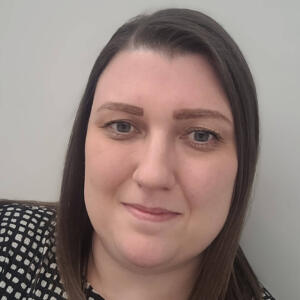 Laura Garnett is a key member of the Clinical Services team, who work collectively within our Fostering, Residential, and Education services across Five Rivers and our Partnership Agencies.
Laura supervises an excellent team of Clinical Practitioners, Psychological Practitioners, and Assistant Psychological Practitioners working specifically within Fostering who offer various services including consultation, training, assessment and reflective spaces in their respective regions.
Her role is to oversee the operational aspect of this service to ensure that young people, Foster Carers and staff teams receive high-quality and trauma informed support.
I started working with Five Rivers almost nine years ago as a newly qualified psychologist. I stepped into my first role as a Clinical Practitioner supporting three Fostering teams and one Residential home in the North of England. My work aimed to support children in care to feel safe and thrive in a stable environment. This meant working directly though therapy with children, consultation with Foster Carers and residential teams, and running training to increase knowledge of trauma and how to respond to it in a helpful way.
In 2022 I moved into a leadership role within our team and fully stepped away from direct work in 2024. I am now working towards the same goal as I always did but in an indirect way. My work focuses on strategically developing and shaping the services we offer based on research and feedback to ensure the best possible outcomes.
We offer something different at Five Rivers. While many fostering agencies work with independent psychologists or therapeutic services, Five Rivers is a research led organisation with an in-house clinical team. This means Five Rivers see therapeutic practice as a core part of their identity and of the work they do across the operational areas.
As an organisation they have invested in and embedded the Attachment and Trauma-Informed Care (ATIC) approach developed by Richard Cross (Director of Clinical Services). This is an evidence-based model that offers a set of principles and values that guide the work we all do regardless of role. It also provides a framework of specific, predictable support structures which research tells us improves outcomes for young people. This is available to all our fostering teams across the country, which means our teams in Newcastle, Truro, London, and everywhere in between are offered the same approach by the Clinical Services Team.
We encourage the early identification of difficulties, which allows us to increase support, stabilise placements, and limit placement breakdowns. We meet with teams regularly to review any challenges our families are facing and agree on a support plan. Bringing everyone in the professional team around the child to work towards a shared goal is key to our success.
I love the team of like-minded people I get to work alongside. Although our Clinical Services team is widespread across the country, we work hard to maintain our connection as a group and offer support to each other to be the best we can all be in our roles. One of our biggest strengths is the range of knowledge that we all bring to the table. Individually we have all taken such different training routes and have had such varied experiences in working with trauma which creates something really special when we get opportunities to bring this together.
I also love celebrating the day-to-day wins. We work in a sector where we are exposed to sad and difficult experiences daily, but when something shifts, meaning things will be better for a young person, it outshines the tough stuff. This could be a range of things, such as when a Foster Carer attends training and has a lightbulb moment and can make sense of what the child has experienced and why they present the way they do. Or if a school can implement recommendations from an assessment, and the child can manage in the classroom longer. Or celebrating when a child and family no longer need additional input from our team because their situation has become stable.
Knowing that our team’s work contributes to these moments keeps me coming back every day.
To me it means opportunity to do things better. The work of the Clinical Services team is a prime example of what being a Social Enterprise can make happen, as our sector leading research and the work our team does across the organisation is largely enabled due to the reinvestment from our Social Enterprise Fund. Five Rivers can offer a level of support to their teams and families that is quite unique. Our research and development is also helping to inform and shape the sector.
If you want to join our Social Enterprise, take a look at our current vacancies to find a role turning children’s lives around.